
Posted on Leave a comment

How to Help Build Your Child’s Vocabulary

parents talking to toddler at dinner table

Children are constantly learning. When they speak their first words, that’s the result of months’ worth of learning and observing. However, it takes much more time for them to get a full grasp of their native language. The rate at which children learn new words after they’ve begun to talk can vary, and much of that variation depends on what their parents do to help them learn. Here, we discuss some ways you can help your child build their vocabulary so that they can begin expressing themselves.

Narrate what you’re doing

Children learn new words by watching and listening to their caregivers. This doesn’t mean just when you’re directly speaking to them; children will also learn when they watch you going about your day. By narrating what you’re doing in the moment, you are introducing new words into your child’s vocabulary. For instance, if your child is sitting at the table while you’re setting the table, you can say something along the lines of: “And now it’s time to put down the plates. Next are the glasses, and then the napkins.” By using this technique, also known as self-talk, your child has just learned the words “plates,” “glasses,” and “napkins.”

Narrate what your child is doing

This is similar to what we explained before, but instead of narrating what you’re doing, you narrate what your child is doing. This technique is known as parallel talk. It’s best used when your child is fully engaged in an activity, such as playing with their stuffed animals. For example, if your child is placing a tea party set in front of their teddy bear, you may say to them, “Oh, I see you’re setting up a tea party for your teddy bear.”

Read to your child (and encourage them to read by themselves)

Reading is perhaps the best and most effective way of building your child’s vocabulary. By reading a wide variety of books, your child will be exposed to thousands of different words. Of course, it takes time for children to learn to read. That’s why it’s important for parents to read to them even when they’re infants. As your child gets older, you can instill a love of reading and encourage them to read by themselves.

Stuffed animals can be a great partner when trying to help your child build up their vocabulary. Look through our website to find the perfect stuffed animal for your little one today!

Posted on Leave a comment

3 Tips on Choosing the Perfect Stuffed Animal for Your Little One

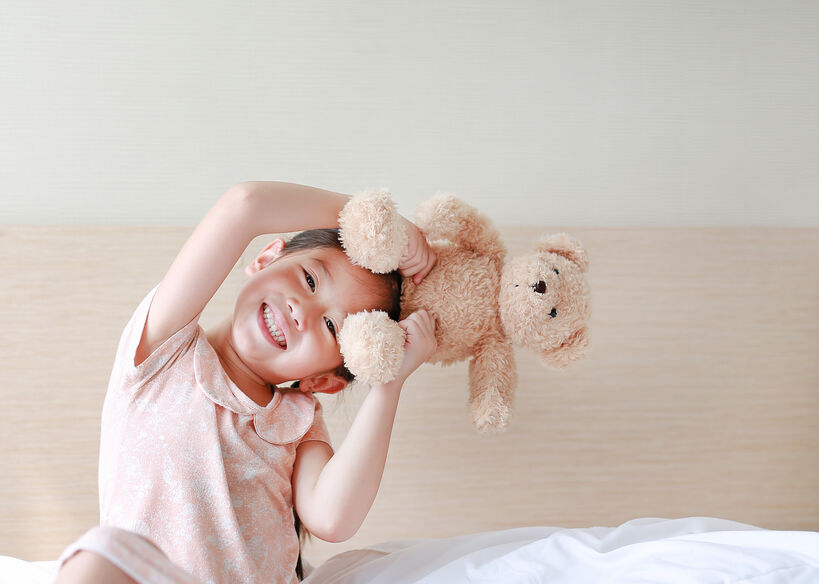
smiling girl playing with teddy bear

The holiday season is quickly approaching and soon, parents, grandparents, aunts and uncles will be searching for gifts for the children in their lives. In most cases, you can never go wrong with a stuffed animal. But how do you choose the right one for each of the special children on your list?

Classic Style

Think back to the childhood stuffed animal you shared all of your greatest adventures with. Chances are it was a classic teddy bear or another soft and snuggly animal like a rabbit or a dog. We recommend choosing a similar stuffed animal friend for your little one.


Sure, all of our children love the fun characters they watch on T.V., but it is unlikely that their adoration for this particular character will last. This is why a classic stuffed animal makes such a perfect gift. They will never go out of style, giving them the potential to remain your child’s best friend for years to come.

Neutral Color

Not sure what color stuffed animal your child will love most? Instead of choosing a bright color or wild pattern, opt for a neutral, natural color like brown or tan. This way, your child will be able to make their own choices with the stuffed animal, dressing then in fun costumes and clothing that match their own personal style.

Cuddly Soft

Another important factor when it comes to finding the perfect stuffed animal is how soft it is! Your child will want a stuffed animal friend that they can hug and snuggle when they need some extra support. And with a Zoo Factory stuffable animal, you will be able to choose exactly how much stuffing you use to create that cuddly feel!

As the holiday draw near and you start your shopping, head to The Zoo Factory to select the perfect stuffed animals (and outfits) from our online selection. We have everything you need to make this holiday season a special one for the children in your life.

Posted on 1 Comment

How Children Benefit from Playing with Teddy Bears

child playing with teddy bear on floor

Whether your child is just learning to walk or is conquering their first year of elementary school, they are sure to have a favorite toy. It may be a doll or an action figure, but more likely than not, it is a stuffed teddy bear. And looking back on your own childhood, one of your fondest friends was probably a stuffed animal as well.

Why? It may have to do with the benefits that a stuffed teddy bear friend can provide. From word recognition to emotional discovery, these benefits begin when your child is a baby and continue on throughout their school years.

Practicing life skills

Playing with teddy bears and other stuffed animal friends allows our children to practice the life skills they are constantly learning, role playing with their stuffed animals and teaching them how to perform tasks like brushing their teeth and getting dressed for school.

Socialization

Teddy bears also provide an early form of socialization. Whether your child is having a tea party with all their favorite stuffed animals or is the teacher in a school filled with fluffy rabbit, dog and teddy bear students, there are endless opportunities to learn good behavior.

Inspire learning

Even as our children get older, introducing them to wild and exotic stuffed animal friends – like crocodiles, hippos and gorillas – is a way to inspire learning. When they have a new and unique animal hanging out with them every day, they are sure to want to learn more about the creatures and the habitat it resides in in the wild!

Searching for a new stuffed animal for your child? Why not make the introduction of their new friend even more exciting by letting them stuff their teddy bear all on their own? Here at The Zoo Factory we offer a wide variety of stuffable animals, along with clothing and party packages for birthdays and other special events!

Posted on Leave a comment

Tips on Hosting a Teddy Bear Tea Party

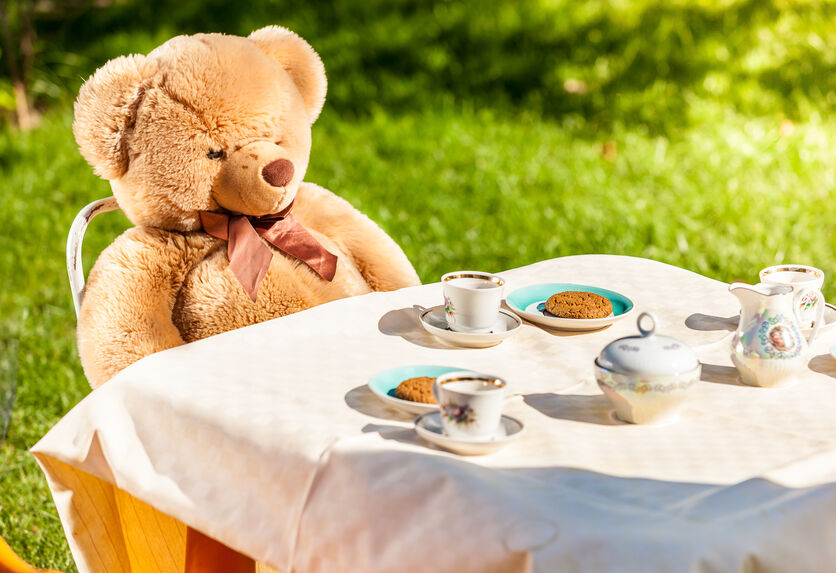
Outdoor photo of teddy bear sitting at yard and having english breakfast

There are few things in the world as beautiful as the imagination of a child. If your child is eager to imagine, embrace it!

A great way to encourage imaginative play, which can come with various benefits, is to help your child throw a teddy bear tea party. Here are a few ways to get started:

Think As a Child

In order to start preparing for a teddy bear tea party, it is important to get into the mind of your child. Allow your child to inspire you. Sit down with your child and help them brainstorm party ideas. Make sure you listen to them, consider which ideas you can truly make happen for them. For example, if they want to serve chicken fingers, embrace it!

Maybe they want a party complete with fancy dresses and top hats, or a more casual tea party with pajamas and a few favorite books. Don’t forget to invite a few favorite teddy bears to the brainstorming session; after all, the party is for them!

Do the Work Together

Consider letting your child “host” their teddy bear tea party which will give them an opportunity to prepare for something. Take a trip to your favorite store to choose some affordable decorations. Use markers and papers at home to create several invitations. Let your child help you prepare a simple cookie recipe and assign them the job of “head taste tester.”

Before the party begins, let your child go get ready for their party as you take care of the final touches.

Be Sure to Celebrate

Don’t be afraid to let yourself go and join in on the fun. Once you and your child have prepared the party, it’s time to sit down with their favorite teddy bear friends and take it all in. Watch them imagine and simply follow their lead. Most of all, don’t forget to capture a few photos of what will certainly be a priceless memory. Free yourself up to completely dive into your child’s world and enjoy, you’ll be glad you did.

Hoping to expand the guest list? Visit The Zoo Factory for all different kinds of animals eager to come to the next tea party!

Posted on Leave a comment

What Is Sittervising?

young parents watching their children play in the living room

If you’re a parent on any kind of social media platform, you may have seen the term “sittervising” thrown around. But what does this mean? And is this a good parenting technique? Here, we go into the details.

Sittervising—explained

The term sittervising may be new, but the technique is not. First coined by blogger Susie Allison of Busy Toddler, it describes how parents sit down and supervise their kids playing, but do not intervene. There’s a bit of distance between the parent and the children, allowing kids space to explore and become independent without feeling like their parents are hovering over them.

Of course, the term has the word “sitting,” in it, but you don’t have to sit and watch your kids. You can be off in another room, or doing some other type of work while your kids play. Kids should be in ear-shot, but you don’t need to be checking on them constantly.

Should you practice sittervising?

According to Allison, sittervising can benefit both parents and kids. “In sittervising,” she said, “children get the necessary time to play without adults interfering with the play-learning process. Adults get back the time they need to rest or complete jobs, helping to ease stress and burnout.”

Sittervising can also make your kids feel more independent and self-sufficient. Nevertheless, it can be nerve-wracking for parents to try at first. If you’re nervous, go slow. Start with actually sitting down and watching your kids play from a distance. Then, start doing some other work in that room while your kids are playing. Once you’re comfortable doing that, you can work yourself up to leaving the room for longer and longer periods of time.

Whether you’re sittervising or not, stuffed animals are the perfect play companions for your kids. Look through our collection at The Zoo Factory to find the perfect playmate for your child!

Posted on 1 Comment

Tips to Get Your Kids to Clean Up After a Birthday Party

person vacuuming glitter from party


Cleaning up after a rocking birthday party is definitely the only downside of having such a great party for your child. However, if you get the kids involved it can help the process and you can create memories while doing it. There are a few different approaches to getting the kids involved, so make sure you choose the best option for your kids and your kids attention span. They usually want to help but don’t know how. Maybe this will be the beginning of helpful hands cleaning up after themselves.

Play a game

One exciting way to get the kids to help is to play a game; the best game to play is dress up! Since your children have the imagination, they can use it to dress up as maids or butlers. Another dress up game that can be fun is pretending to be Cinderella. In this type of setting, you might be able to get your children to scrub the floors from all the cake smashing! At the end, you need to have some fun and make sure your prince and princesses get a ball… complete with a special dance!

Make it educational

If your children are old enough to count, turn it into an educational experience. Ask them to pick up 5 things and count them out as they pick them up. Then continue with adding on numbers until the whole house is spotless! This can also work if you tell them to pick up all the blue objects, then all the pink ones and so on. You could also make it a competition to see who can fill his or her garbage bag with the most items. Make it a fun experience and your children may want to help out more often than just after the best birthday party ever.

Add a competitive element

Many kids love to compete. So, turn cleaning up into a bit of a sport! Have your kids compete to see how many items they can pick up or how quickly they can clean up an area in the allotted time. They can compete against their siblings or against yourself.

Posted on Leave a comment

Hand-Me-Down Etiquette for Children’s Toys and Clothes

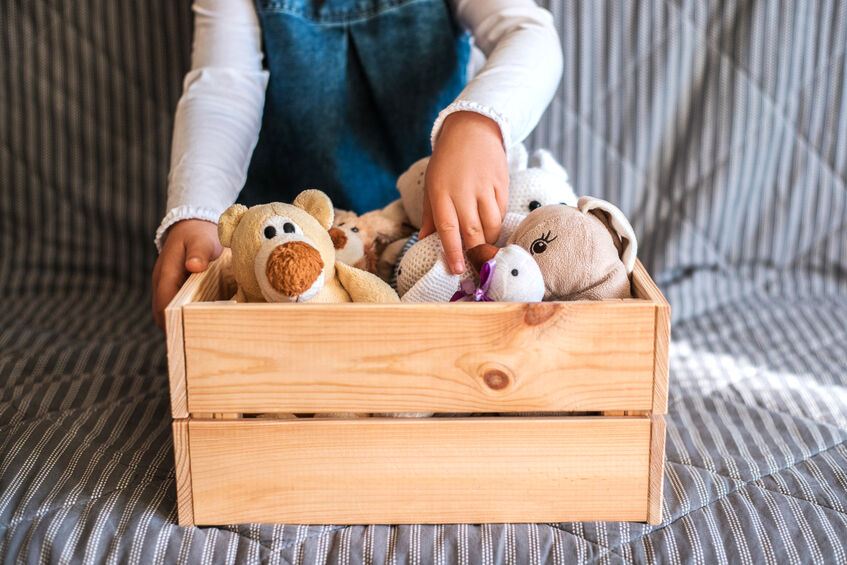
young girl kneeling in front of box full of stuffed animals

As your child gets older and friends and family members start to have little ones of their own, you may be tempted to give them some of your child’s old toys and clothes. However, before you throw your child’s old things into a bin and ship them off to someone, you may want to ask yourself a few questions. Following these hand-me-down etiquettes can ensure that everyone is happy in the long run:

Make sure the other person wants your hand-me-downs

Don’t just show up at your friend’s doorstep with a box of baby supplies in your hands. They may not need those supplies, or they may not want to give their first baby hand-me-downs. Whatever the reason, there is always the chance that the other person may not want your hand-me-downs and you’ve just put them in the awkward position of either taking things they don’t want or saying no to your face. So, be sure to ask them first instead of just assuming they would take your hand-me-downs.

Only give items that are gently used

Giving someone hand-me-downs is not an opportunity to clear away junk. The items you give them should be in good condition and gently used. Anything with stains, tears, or other forms of damage should be thrown away.

Let the other person pick and choose what they want

If the other person agrees to take some of your hand-me-downs, don’t just give them everything you have. Instead, invite them over one day and let them go through what you have. That way, they can pick and choose what they want or need, and they won’t have to get rid of a bunch of items. If there are items leftover, consider donating them to a local charity.

As you’re getting rid of your child’s old belongings, make sure you replace some of those old toys and stuffed animals. Here at The Zoo Factory, we have plenty of stuffable animals for all ages. Look through our website to get started!

Posted on Leave a comment

How to Teach Your Child to Make Their Bed

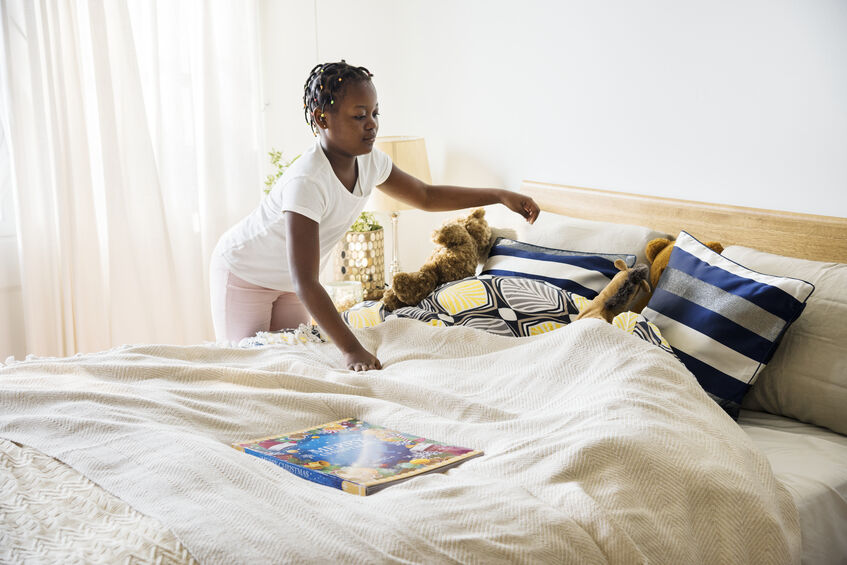
young girl making her bed

Everyone loves sleeping in a carefully made bed. We adults often make our beds in the morning so we can savor going to bed at night. Not only that, but it also helps keep our rooms neat and tidy. However, our children don’t think the same way. Teaching our kids to make their beds, then, can be easier said than done. But it’s not impossible.

Walk them through it

When you first made your bed, you probably didn’t know what you were doing. The same is true for our own kids. They won’t know how to make their beds at first, or how to make it easy to make their beds. That’s where we come in. Walk them through how to make their beds the first several times they do it. Then, gradually allow them to do it more and more on their own until they have it down.

Make it a habit

Your child is more likely to make their bed if it becomes a habit. To do this, we recommend using habit stacking. Habit stacking involves doing a new habit immediately after an already established habit. For example, you could have your child make their bed everyday after they brush their teeth.

Make it fun

Let’s face it, kids don’t like to do chores. However, they’ll be more likely to do them if a little bit of fun was involved. When you’re first teaching your kids, have some fun with them! Joke around or try to make it a competition to see how fast they can make their bed. You could also get their stuffed animals involved by neatly placing their favorite ones on their newly made bed.

Do you have your own tricks for teaching your child how to make the bed? Share them in the comments section below!

Posted on Leave a comment

How to Help Your Child with Back-to-School Anxiety

Happy schoolchildren studing and answer questions in classroom during a lesson at primary school

Few kids want to go back to school, but some may even be anxious about the idea of it. Back-to-school anxiety is completely normal. Nevertheless, it’s never fun to go through, for the child or for the parents. Here, we list some ways you can help your child deal with their back-to-school anxiety.

Remind them (and yourself) that this is common

When kids start feeling anxious about going back to school, it can be easy for them to think that they’re the only ones who feel this way. But this kind of thinking can make them feel isolated, increasing their existing anxiety. It’s important to remind your kids (and yourselves) that back-to-school anxiety is completely normal and that there’s nothing wrong with feeling nervous.

Take a day to walk them around the school or classroom

Kids become especially nervous if they’re starting a new school or simply changing classrooms. The fear of the unknown sets in, and it makes it all the easier for their minds to create catastrophic situations. To help dispel these fears, take a day during the summer to introduce them to their new school or classroom. Walk them around and show them the different rooms they’ll be taking classes in. Just make sure you get the school’s permission before you do this!

Problem solve

Ask your child why they’re so nervous about going back to school. Once you have their reasons, you can figure out ways to resolve those worries. For instance, if they’re worried that they won’t have friends in their classes, ask around to see which kids are in your child’s classes. If they’re concerned about their workload, show them that they have already handled tough workloads in the past.

Provide comfort

At the end of the day, your child may just need a hug or a comforting presence near them as they gear up for school. Try to support them as much as you can. You can even keep them entertained with some of their favorite activities to take their minds off of school.

Stuffed animals can be a great way to comfort your child when they’re nervous. Here at The Zoo Factory, we have many stuffable animals for you to choose from. Look through our online inventory today to get started!

Posted on Leave a comment

The Importance of Washing Stuffed Animals Regularly

Above top view adorable slumber little girl embrace stuffed toy dog sleeping in comfortable bed with white fresh linens, closed eyes kid resting having daytime nap refreshment, bedtime ritual concept

A stuffed animal is a child’s best friend. They go for car rides, play in the backyard, and travel to every corner of your child’s imagination with them. With all of this adventure, they are bound to get a bit dirty on their travels, which is why it is so important to wash your stuffed animals on a regular basis.

Why Should You Wash Stuffed Animals?

If your child has any allergies, regular washing of their stuffed animals will help to prevent flare ups. Dust mites can collect on stuffed animals, potentially causing eczema and asthma attacks. Besides when your stuffed animals get dirty, it is also important to wash them after your child is sick, or if there is a case of head lice found at their school.

When Should a Stuffed Animal Be Washed?

Any parent will tell you that trying to get a stuffed animal away from a child is a difficult task, especially if it is a favorite one. Nevertheless, it’s still important to wash them every now and then. You should try to wash your little one’s stuffed animal friends when you notice that they are soiled, have food or other grime on them. We recommend getting this task done during the day, so your child can still go to bed with Teddy in their arms at night.

How Should You Wash a Stuffed Animal?

A common misconception about washing stuffed animals is that they will be destroyed in the washing machine. However, you can put a stuffed animal in the washing machine with no problem at all. Just make sure you put the washing machine on its gentlest cycle to prevent any buttons from falling off.

You can also follow our guide here on how to wash your stuffed animal in a washing machine or by hand. And if you have further questions, the pros at The Zoo Factory are always here to help!